Tuesday, June 17, 2014

Looking Back on My First Full Year of Flipped Learning

Wikipedia // Gary Bridgman
This year, I've organized my content into Mastery Learning Cycles, which is a flipped learning model that blends mastery with Explore-Flip-Apply. This is my attempt at reflecting on the most salient points of the school year.


Positives
No More Teacher in the Center: I'm no longer the center of attention and class time is reorganized for higher order tasks and independent and collaborative learning. Students took responsibility for their learning. They made choices about how to spend "homework" and "classwork" time. If they wanted to study or do a lab instead of watching a video or completing a problem set, they made the choice that worked best for them. If they wanted to leave a group because the dynamics or pacing didn't work, then they made those changes. One consequence that emerged was as the year progressed, students found ways to get their questions answered other than by asking me. Some students asked classmates and others did research. I have to admit to missing answering questions but I do love the student ownership of their learning.

Growth Mindset: The retaking of randomized quizzes and the mandatory redoing of labs and problem sets until perfection have helped create a growth and grit mindset. Students understood that their performance can swing significantly by the end of a class period. They no longer tended to freak out when things were not going their way. By the middle of the school year, students were sharing their disappointment on a quiz, informed me of what they need to do and then executed their plans. 

Achievement: The traditional indicators for student achievement were up this past year. Grade averages were higher than in past years while the number of academic notifications dropped. (More information to come.)

Research Based Pedagogy: I used more research based techniques. Aside from Mastery learning, which has been known to be effective for more than three decades, I also used learning cycles, Peer Instruction and more inquiry based labs.

Tweaks
Refining the Teacher's Role: Next year, I want to spend less time as a "study hall" monitor and more as a facilitator of learning. As students became more independent, I spent more of my time checking off assignments and recording scores. This interfered with spending quality one on one time with individuals. I rather spend more time conducting small group and peer instruction. 

Standards Based Grading: I want to move to Standards Based Learning (Grading.) The grade and grade book have to be more meaningful and provide more clarity. To that end, I will have fewer mandatory assignments and hope to give students more choices to demonstrate mastery of learning. 

One on One Talks: I want more one on one talks with students so that I have a better idea how to best serve each individual.  Perhaps I will require one on one talks before taking the first attempt on a quiz. During these talks, students can show me how to solve a problem in real time. These talks can also prevent students from rushing through content and taking quizzes before they're ready. Perhaps I can have some of these talks as part of the mastery task at the end of the learning cycle as well. 

Meaningful Quiz Attempts: To further prevent wasting quiz attempts, I'm also rethinking how to address redos. I may mandate quiz corrections and/or remediation after the first and/or second attempts. I have mixed feelings about the mandate, and may only mandate it for failing quizzes and/or for specific individuals. The idea of my changes is to hand over autonomy to my students - increasing mandates undermines this philosophy. In a similar vein to support students, perhaps on an individual basis, I'm considering notebook and iPad checks to help with organization. 

More Immediate Feedback: I most likely will add more step-by-step solutions to answer keys. This year, I only included partial keys because I wanted to make sure students completed the problem set. However, since more of these assignments will be optional, then it may be more useful to have some worked out answers and some with only answers. Again, this will allow for more instant feedback and give me more time to work with students, rather than checking steps of problems for all assignments. 

Meaningful Assignments: I also wish to include more interesting, memorable and meaningful assignments. By increasing choices, I may be able to generate more excitement about assignments. The use of choice boards as mastery checks will be helpful here as well. The projects I used were based on good ideas but their execution were highly flawed; I need to do some more learning about project based learning

Inquiry Focus: I want to include more inquiry labs and have DNA barcoding as the Science Night project. To allow for the time for both, I'll need to reevaluate the important topics and streamline the course to make these accommodations. I've identified some topics and learning cycles that are already taught in the high school biology course so I may make some learning cycles optional for students who finish the course before others. 

Final Thoughts
All in all, it was a solid year of some key changes. While student success indicators are higher than in past years, students had mixed responses about their feelings of the flipped model (a topic of a future blog post.) As expected with something drastically different, my execution was a bit uneven and I have a lot of room to grow. At the very least, this first year was a successful experiment in shifting the teacher outside of the center and making students more accountable for their learning; I expect to enjoy more success as I improve on the caliber of assignments, figure out some logistics and provide even more student choice. 

Thursday, June 5, 2014

Gratitude for 1:1 iPad Program

Faculty iPad with Friends Seminary Logo on Cover
 Leaders in different fields make decisions and policies without always being able to predict the exact consequences of those decisions. I suspect the same thing occurred at my school when we instituted a 1:1 iPad program years ago. Even though I personally prefer laptops for science due to their superior graphing options and ability to play Flash-based simulations, I have to admit the 1:1 device initiative set the conditions for programmatic innovation. 

 Our 1:1 iPad program started in a select number of grades a few years ago. I'm thankful my first full year flipping Introductory Biology coincided with 8th graders having their own iPads. At this point, I no longer print materials. Students decide whether they want to complete their work in Google Drive, Notability or print it. They decide whether they want to submit their work via email, Google Drive or show me in class. Since students work at their own pace, they need to have constant access to course materials. At any instant, students need to be able to watch a video, take an online quiz, or do some research. None of this is possible, or at least as seamless, without some sort of 1:1 program. 

It's easy to take the 1:1 iPad program for granted. However, I'm reminded of its importance when a student forgets to charge his or her device, or is waiting for repairs. Without a laptop cart as a backup during those periods, some students would have a difficult time progressing through the learning cycle. 

I'm unsure if the school leadership predicted the rise of blended, flipped or asynchronous courses years ago when we insitituted one of the earliest 1:1 iPad programs. What I do know is the 1:1 iPad program has been crucial to the success of my course. Students have benefitted tremendously, have become more independent and self reliant, in part, due to the ubiquitous devices we've come to take for granted. Thank you to the school leadership for setting the conditions for flipped learning before I even became aware that I wanted to go in that direction.

Friday, May 30, 2014

Putting in Work

Source: www.localfitness.com.au
Imagine a workout session with a physical trainer and client. After this session, which person ought to be sweaty, tired and out of breath? The answer is so obvious that the question seems silly to ask. Yet, there are classrooms across the world where the teacher is exhausted after the lesson and the pupil's most tiring activities were taking notes and perhaps pretending to be engaged. 

I've always had issues with teachers lecturing on a consistent basis. Just as it seems obvious that the physical trainer ought to be demonstrating, facilitating and providing feedback during each session, the teacher ought to do the same during each lesson. If the trainer did every rep and set of every exercise during a session, while the trainee took notes and asked the occasional question, then we might confuse the trainer for the trainee. 

The person who is learning should be the one doing most of the work. Students have to do the hard work of learning. Just as a trainer who does every rep and set of every exercise gains more than the passive trainee, teachers who lecture benefit from restating content before an audience more so than their passive students. The note taking trainee and student gain very little in comparison to their note giving counterparts.

After each lesson, I want my students to feel the strain and fatigue of the mental exercises I created for them. I want them to feel challenged and accomplished for succeeding after some level of failure. Just as muscles strengthen in response to physical challenges and atrophy after lack of usage, students learn when mentally challenged and become lazy thinkers and not invested when being lectured to on a daily basis. 

After each lesson, one reflection question we ought to ask ourselves: "who did all the work?" If the answer is "my students," then it's more likely students have done most of the learning. 

Friday, May 23, 2014

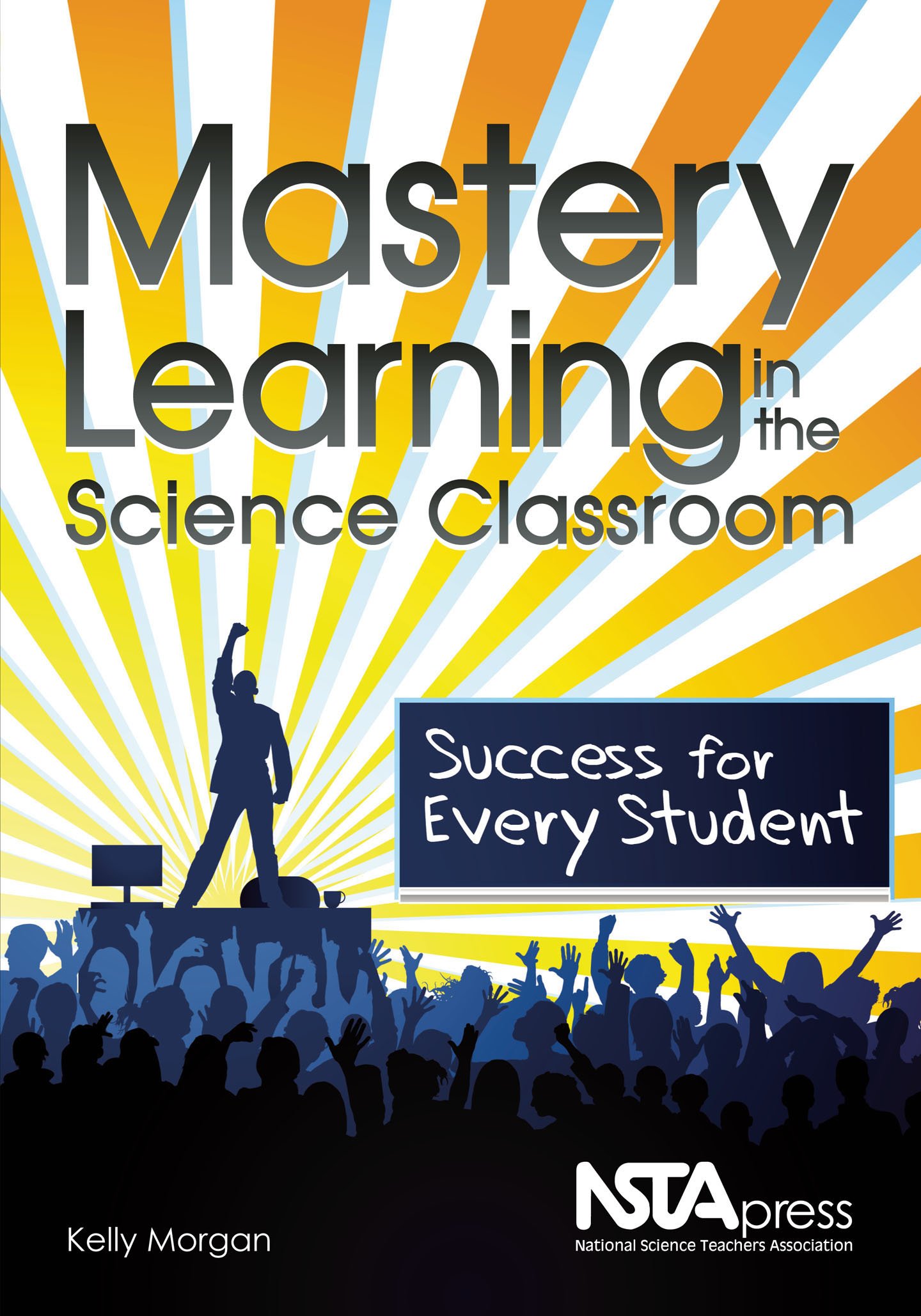
A Review of "Mastery Learning in the Science Classroom"


Kelly Morgan's book on mastery science classes only spans 68 pages but is full of insight and practical advice. The book outlines her motivation and journey to mastery learning, while also dedicating a chapter to the research, some of which, has long since been forgotten.

Perhaps the most interesting point made in book is the revelation that research supported Mastery Learning decades ago. Mastery learning classes were unsustainable at the time and researchers stopped performing studies because of this lack of feasibility. There's an odd yet powerful observation Kelly makes: researchers stopped investigating mastery, not because it didn't work, but because it did work - there was just no way to pull it off!

Fast forward a few decades, the changes in technology do allow for mastery learning. It's no surprise that the pendulum shifts back to mastery.


I also appreciated some of the practical recommendations. Some of the particular suggestions are a bit dated since technology continued to advance even since the publication of the book a few years ago. Nevertheless, the idea of using an LMS, online varied quizzes and offloading direct instruction to an on-demand platform are still crucial to the success of mastery learning classes.

I highly recommend this book for flipped mastery practitioners or those who wish to explore the possibility. It is a great read!

Friday, May 9, 2014

Applying #Flipclass to Conference Presentations: a Post #TWT14 Reflection

As I finalized my presentation for the Teaching with Technology Conference about flipped learning, previous whispers of doubt started to scream too loudly to ignore. "You are planning to do exactly what you hate about professional development." I'm embarrassed to admit I almost took the easy way out:  a traditional lecture on a nontraditional teaching practice consisting of slides of me yammering about my flipped class, without applying the lessons that I learned from #flipclass. 

Despite the wonderful things I learned at FlipCon13, I wondered why the conference wasn't flipped. I remember asking Jon Bergman and he admitted this was a common question. Fast forward almost one year, I proudly receive an email reminding me to finalize the flipped assignment that accompany my presentation during FlipCon14. Surely, the best way to learn about flipped learning is to experience flipped learning. 

Lodge McCammon gave a wonderful keynote address about flipped learning. He covered most of the same introductory ideas I planned to present at the Teaching with Technology Conference. The video of Lodge presenting in front of a live audience caught my eye. I quickly realized that the entire presentation wasn't a video playing in front of an audience, rather Lodge ingeniously decided to prerecord direct instruction about flipped learning and used the rest of the live presentation to interact with the audience. Between these flipped videos, Lodge used pair-sharing, collaboration, invited audience members to create videos that summarized their group discussion and even reflect on their videos. Lodge applied what he learned from flipclass to his presentation. Direct instruction, which could have taken an hour to present live, was condensed to just a few minutes in video format. The retrieved time was reallocated to interactive activities that transformed the typical zombie audience into critical thinkers, consumers into producers and passive watchers to active participants. 

After viewing Lodge's keynote "presentation", I was unable to follow through with my initial plan in good conscious. I reworked my presentation. I recorded separate videos outlining the key ideas I wanted to convey. Between these videos, I engaged the audience in critical thinking, experience elements of flipped learning and reflect on their learning. Because of this offloading of direct instruction to condensed videos, teachers were able to identify benefits of flipped learning, predict obstacles, offer solutions and ask and answer questions. I also picked up some nuggets of wisdom. In fact, more than half of my presentation were teachers discussing ideas. The most important benefit was the audience experienced how a flipped class could transform a class.

While I'm happy that this was more of a discussion than a presentation, there are a few things I would change so far:
  1. A few timing quarks - the last video went through some important content a bit fast. I wish I'd stress the links on the introductory slide a bit more and gave some time for folks to copy the link to the presentation and session notes. I also let an early discussion take more time than I should have. This eliminated the feedback time at the end.  
  2. Format - I could've changed the format of each pair-share and discussion. Varying the engagement activities could have displayed more innovative uses of a flipped class.
  3. Practicality - I wonder if my session was too theoretical rather than practical. I mentioned some tools and briefly why/how I used them. This session was more about making the case for flipped learning and sharing models above the limited media definition of flipped learning. (I suppose the title was consistent with my workshop.) 
Despite some of the possible tweaks, I'm grateful that I stumbled on Lodge's video, he reminded me to be true to myself. Thank you! 

Rethinking PD: a Post #Edcamp Reflection


For those who are unaware of Edcamp, it is an "unconference." Unconferences are in contrast to highly formal, commercialized and planned conferences. The specific agenda is not planned ahead. The agenda is dictated by the attendees in real time. A board with a grid showing times and classrooms is posted and teachers who want to offer a workshop or discussion write down a title or brief description into one of the unclaimed spots. A copy of the board is updated online as well. 


A teacher adding a workshop option to the board
When I first read about it, I couldn't believe this idea worked. What if most people just showed up to attend and not lead? What if there were blank spots? My tendency toward foreseeing flaws kicked into over gear. Alas, Edcamp NYC was successful. All of the slots were eventually filled and I even recognized some of the workshop leaders. Rashan, developer of Explain Everything, led a workshop on Screencasting that turned into a nice discussion of sharing best practices. A few of us even shared student work. Andrew Stillman, Google Script developer extraordinaire, led a workshop or two about some of his scripts. This recent nontraditional professional development, led me to reflect on what I would like to see in professional development. 
  1. Practical research-based ideas:  I don't just want theory but I want tangible strategies that are known to be effective.
  2. Individualized: my needs are different than others, therefore, my professional development ought to reflect my unique combination of skills and deficiencies. It also ought to capture what I see as important and is relevant to my practice. It should also be on-demand and driven by my schedule. I should be able to learn on my own time, not necessarily when others are available.
  3. On-going and transformational: I've found continuous pd about a topic is more transformational than a workshop or two about a topic. 
  4. Varied: I prefer to learn from different modalities - books, videos, chats, courses, lectures, etc.
  5. Responsive: I should be able to make adjustments midstream based on feedback and self reflection. 
While Edcamps may not meet all of these requirements, I see a role for them in my professional development plan. Edcamp is the wildcard, sometimes you don't know what you don't know. Edcamp can introduce me to current ideas that are not even on my radar. 

It's almost ironic that the features I want as part of my pd plan mirror many of the characteristics I try to instill in my class. I'm moving toward a more responsive class with varied learning opportunities that individuals can choose from. My students already enjoy an on-demand culture where they learn at their own pace, which is supported by research. The similar desires for my pd and my courses should not be a surprise; at the end of the day, they are both about learning. 

Friday, May 2, 2014

Interview about Asynchronous Learning and Standards Based Grading

Yagraph // Wikipedia

I had the privilege of chatting with Jonathan Bergmann on his radio show, The Flipside on the Bam Radio Network. Primarily we talked about my journey to flipped instruction and standards based grading. The interview is linked here

Aside from my nagging habit of saying "direct instructional days" rather than "direct instruction days," I thought the interview ran smoothly. I also see why Jon was an award winning educator; even as an interviewer, he was captivating, reminding me of his keynote address at FlipCon13


The messages I hope were conveyed during this interview:
  1. Flipped learning saves class time and creates more opportunities for greater engagement and individualized learning.
  2. Asynchronous learning allows for differentiation.
  3. It's possible to adopt aspects of flipped instruction and it is also possible to successfully adopt flipped instruction (and mastery learning) wholesale, without a long period of transition.
  4. Middle school students can thrive in a flipped class.
  5. The assessment based system of grading is broken because it can hide what students truly do and do not understand.
  6. Standards based grading is the solution to the broken assessment based grading system.